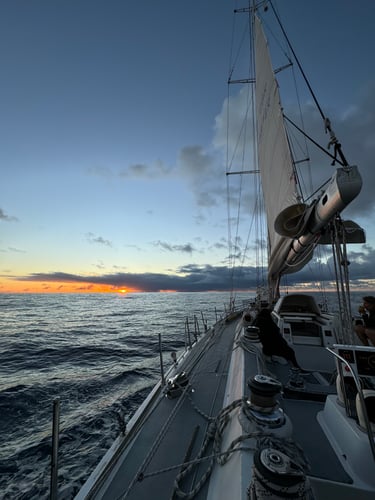
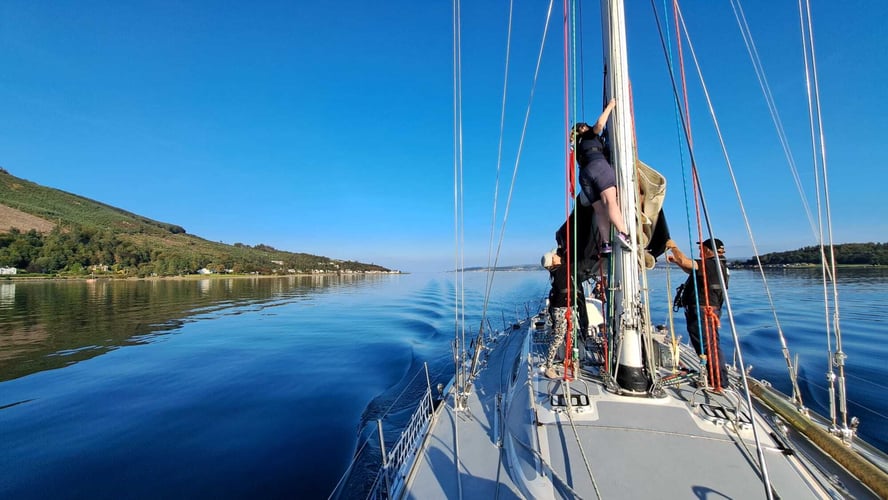
This weekend I completed a Watch Leader Training course with the Tall Ships Youth Trust. If you’d...
When I first saw the advert for the Command & Communicate sailing weekend on social media, I knew it was for me. Not only was it an opportunity to sail aboard Panexplore SV Sea Dragon, one of the legendary Challenge 72 yachts I hadn’t yet experienced, it also offered something new — a leadership coaching programme woven into life at sea. With my current focus on personal development, the combination was irresistible.
I drove down to Portsmouth on Thursday evening after work, parked at the Historic Dockyard, and stayed overnight at the Premier Inn. Portsmouth is one of my favourite cities, so waking up early on Friday, I laced up my trainers and ran along the seafront to Gunwharf Quays. As the sun rose, I caught my first glimpse of Sea Dragon, her distinctive yellow hull lined up alongside three of the Tall Ships Youth Trust challengers.
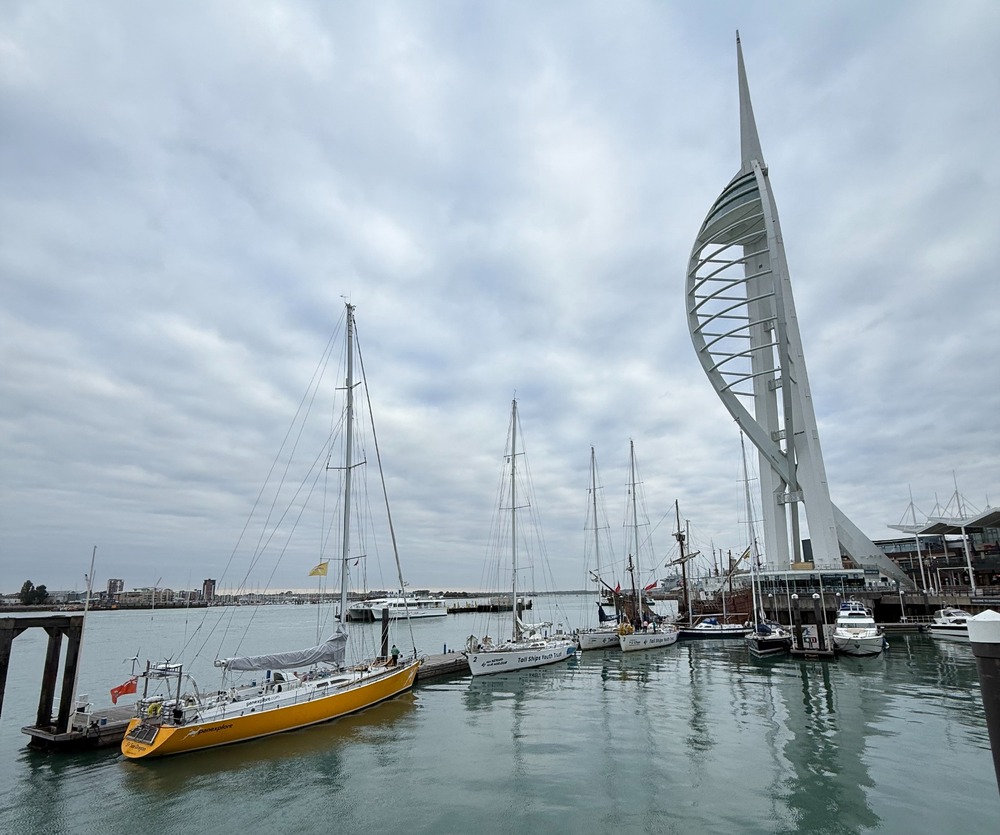
After my run, I returned to the hotel, showered, and packed up my kit. On my way back to the marina, I passed some familiar faces from the TSYT crew — people I’d sailed with on earlier voyages. A quick catch-up was a lovely reminder of how small and welcoming the sailing world can be. Soon after, I joined another participant I’d met on the quay, and together we stepped aboard Sea Dragon. We were greeted warmly by the Panexplore crew, chose our bunks, and began introductions.
This was more than just a sailing weekend; it was a leadership lab at sea. We’d spend the next three days not only helming, hoisting sails, and navigating the Solent, but also reflecting on how we lead, how we communicate, and what it means to bring our authentic selves to the helm.
Day 1 – Portsmouth → Cowes
After settling in, we gathered in the saloon for our opening coaching circle. Each of us shared a leadership goal and a communication challenge we wanted to work on during the voyage. I spoke about wanting to build confidence and learn from the other women on board. It was reassuring to hear that many of us shared similar aims — seeking growth, self-belief, and new perspectives.
By 0930, we were casting off lines and motoring out of Portsmouth Harbour. The Solent was calm, with light SE winds at around 7 knots. Under the guidance of the professional crew, we conducted our first life jacket and winch briefs, then moved straight into sail hoists.
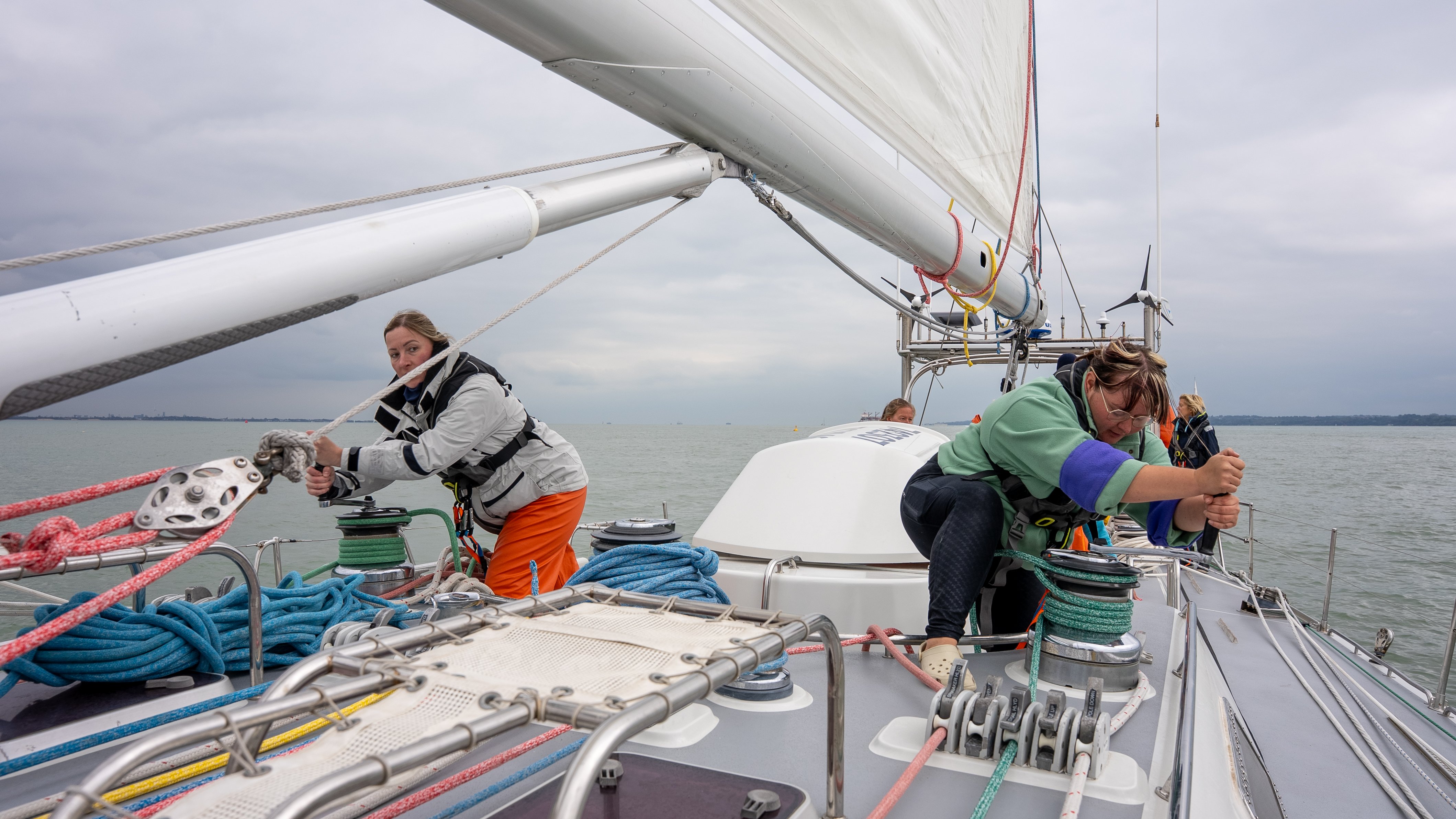
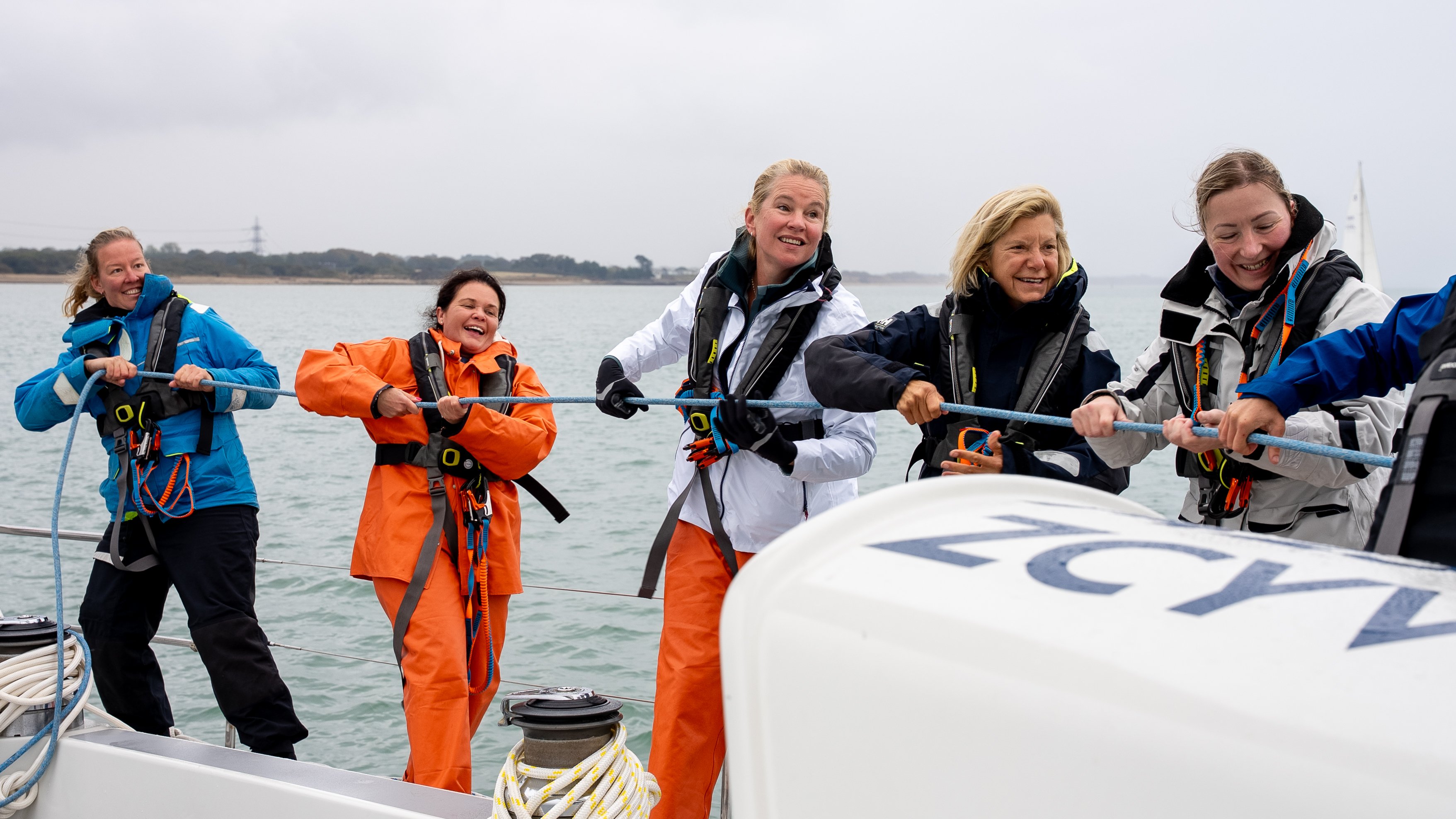
The first challenge we tackled together was a corporate mainsail hoist. Rather than using the yacht’s electric winch, we opted to raise the full main manually — all hands on the halyard, working in rhythm. Our first attempt took 2 minutes and 30 seconds, which felt impressive for a brand-new crew. There was laughter, cheering, and a real sense of achievement.
“The electric winch was indeed working — but we wanted to build our muscles and set an awesome time for a manual full mainsail hoist.”
Next came the man overboard drill. Our “casualty” was a fender tied to a bucket, bobbing on the surface. Everyone took to their roles instinctively: pointers keeping eyes on the casualty, the swimmer preparing to enter, others rigging halyards to lower, and the helm steadying the boat. Within 20 minutes, we had completed the recovery — a great confidence boost for a brand-new crew.
We ate lunch underway, enjoying the rhythm of life aboard. By 1601, we were berthed in Cowes Yacht Haven, our first passage complete.
That evening we dined at the Royal Ocean Racing Club clubhouse. The meal wasn’t just delicious; it gave space for reflection. Over wine and laughter, the crew bonded further, sharing lived experiences and insights into leadership. It struck me how quickly trust had formed, and how open everyone was in discussing their challenges and learnings.
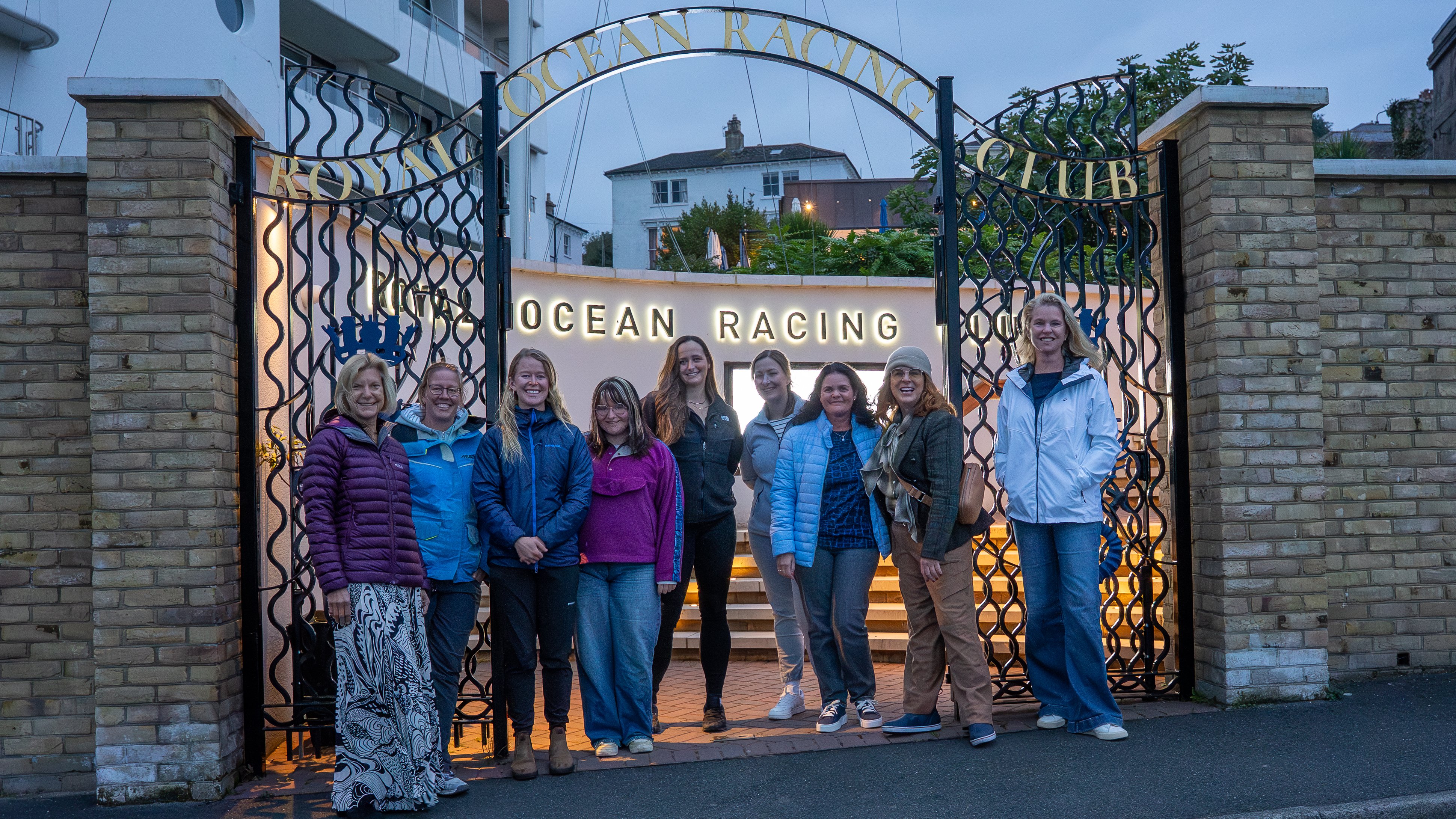
Day one had set the tone: sailing drills intertwined with meaningful coaching, all framed by the unique environment of a Challenge 72 at sea.
Day 2 – Hamble → Warsash (Training Day)
We slipped lines from Hamble at 0950 and set sail under a light south-westerly breeze, hoisting Main, Yankee, and Staysail. The Solent offered perfect training conditions: winds steady at 9–12 knots, just enough to stretch ourselves without being overwhelming.
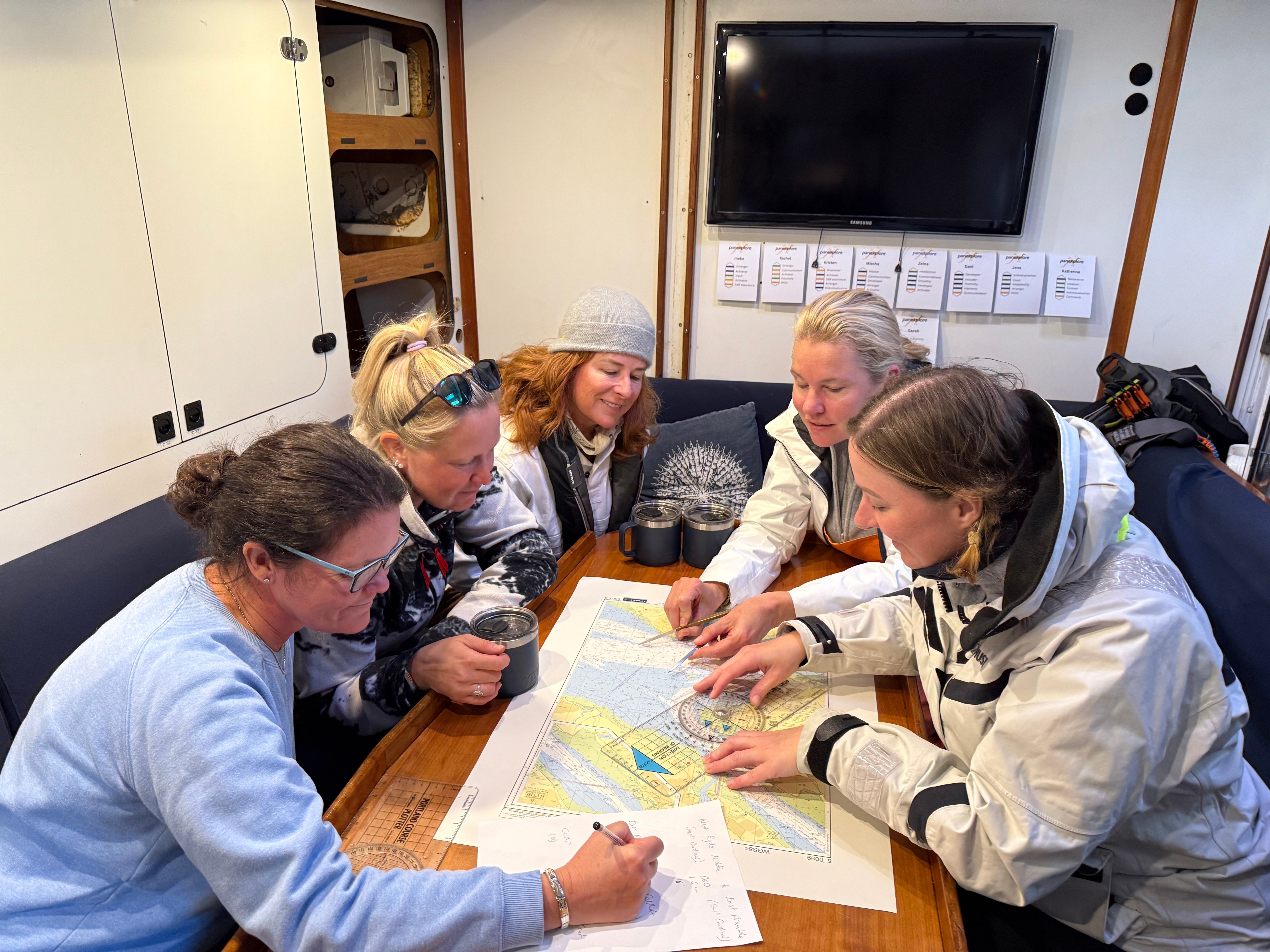
Later, below deck, we gathered around the saloon table for chart plotting training. Pens and dividers scratched over the paper as we worked out bearings and positions. It reminded me that navigation is as much a mental exercise as it is a practical one — and that teamwork matters as much off deck as it does on deck.
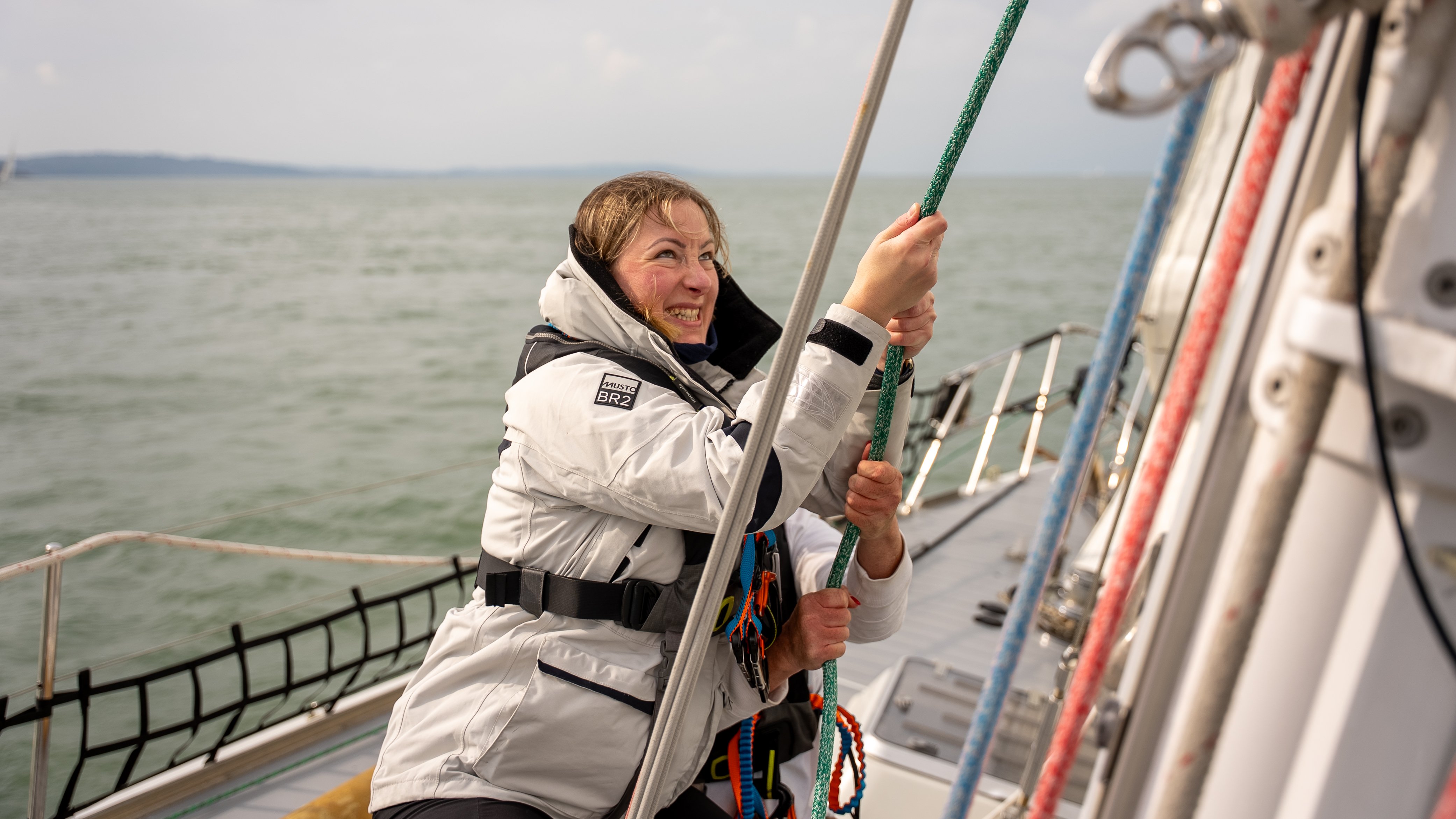
We also revisited our corporate mainsail hoist challenge. With the same determination, we pulled together and managed to shave our time down from 2 minutes 30 to just 1 minute and 30 seconds. It was incredible to see how quickly we had improved — not because any one person had got stronger, but because our teamwork and rhythm had clicked into place.
By mid-afternoon we were pushing west, reaching speeds of up to 8.1 knots SOG. At 1435, as we approached Warsash, we dropped all sails and motored in.
Day 3 – Warsash → Portsmouth
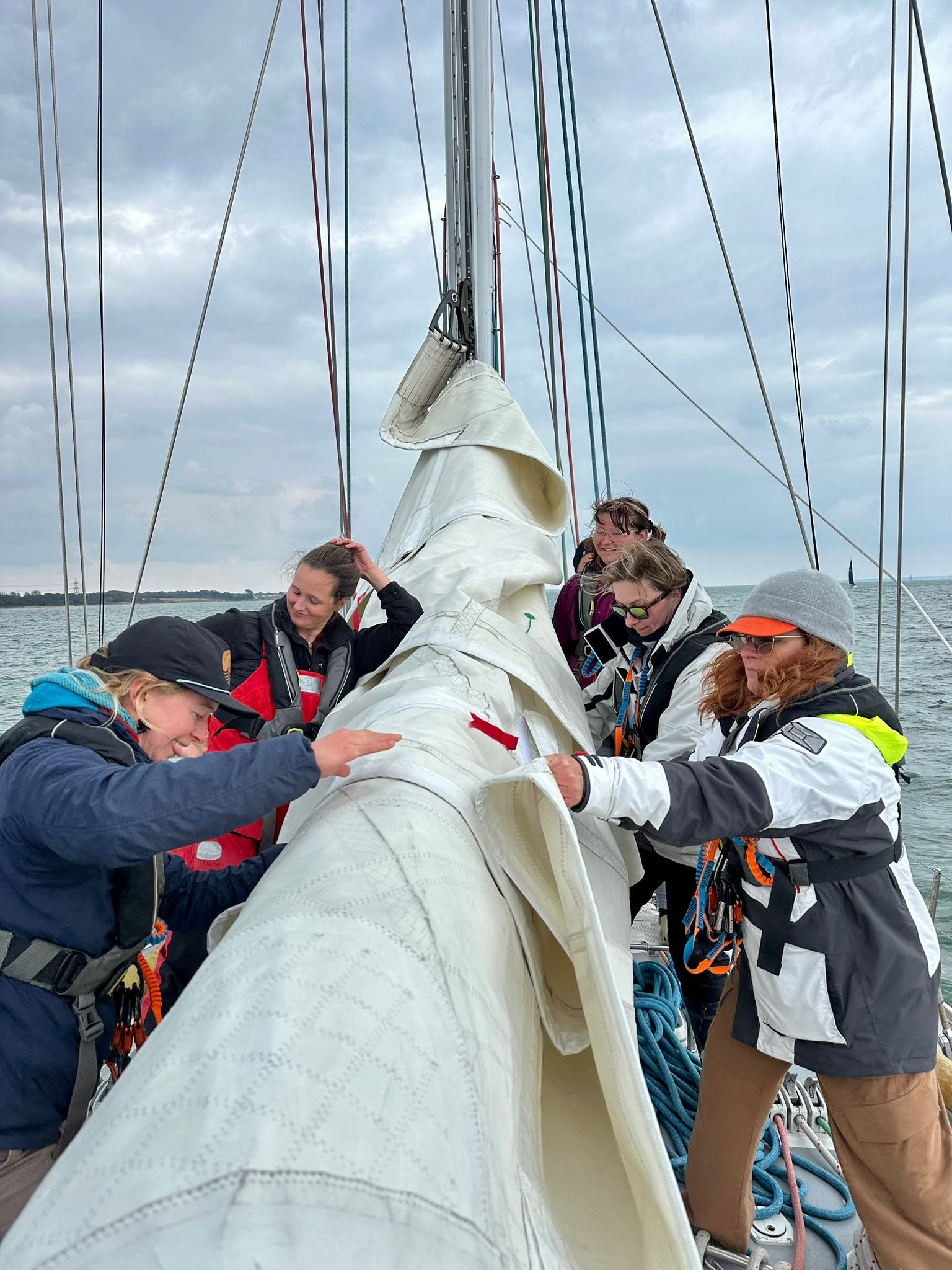
Our final day began under grey skies and light rain. By 0928 we were underway again, hoisting Yankee and Staysail in Southampton Waters before setting a course back to Portsmouth. The rain slicked the decks, but the crew didn’t seem to mind. By now, we were a bonded team — supportive, reflective, and generally appreciative of the experience we were sharing.
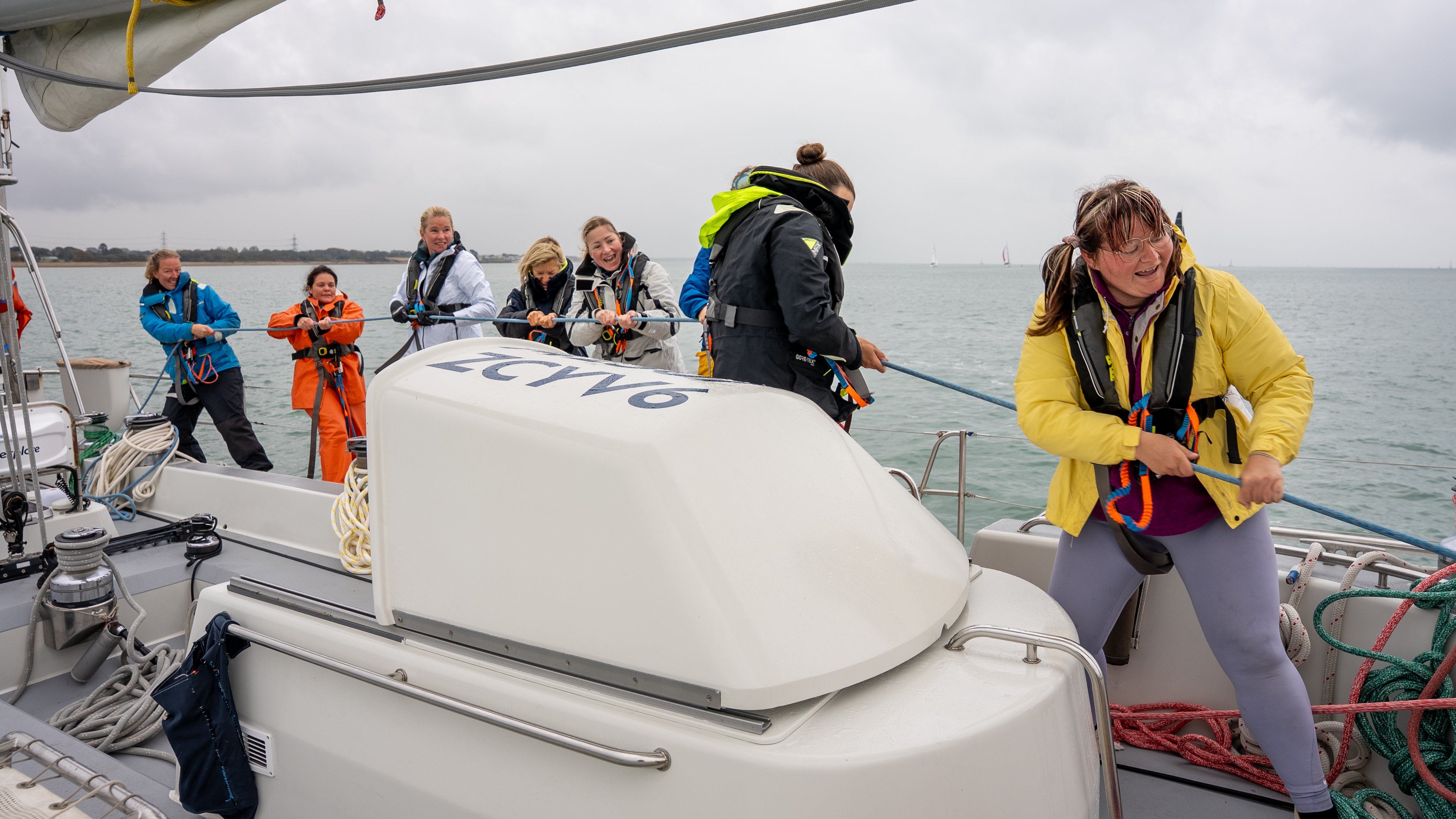
One last time, we decided to test ourselves with the corporate mainsail hoist. Everyone knew their role, and with gritted teeth and laughter we hauled the sail up in just 1 minute and 15 seconds. What began as a physical challenge had turned into something much deeper: a symbol of how quickly a team of strangers could become a well-oiled unit, working in harmony and celebrating each other’s strengths.
The coaching focus was on integration: bringing together everything we had learned over the weekend. During the final round table reflection.
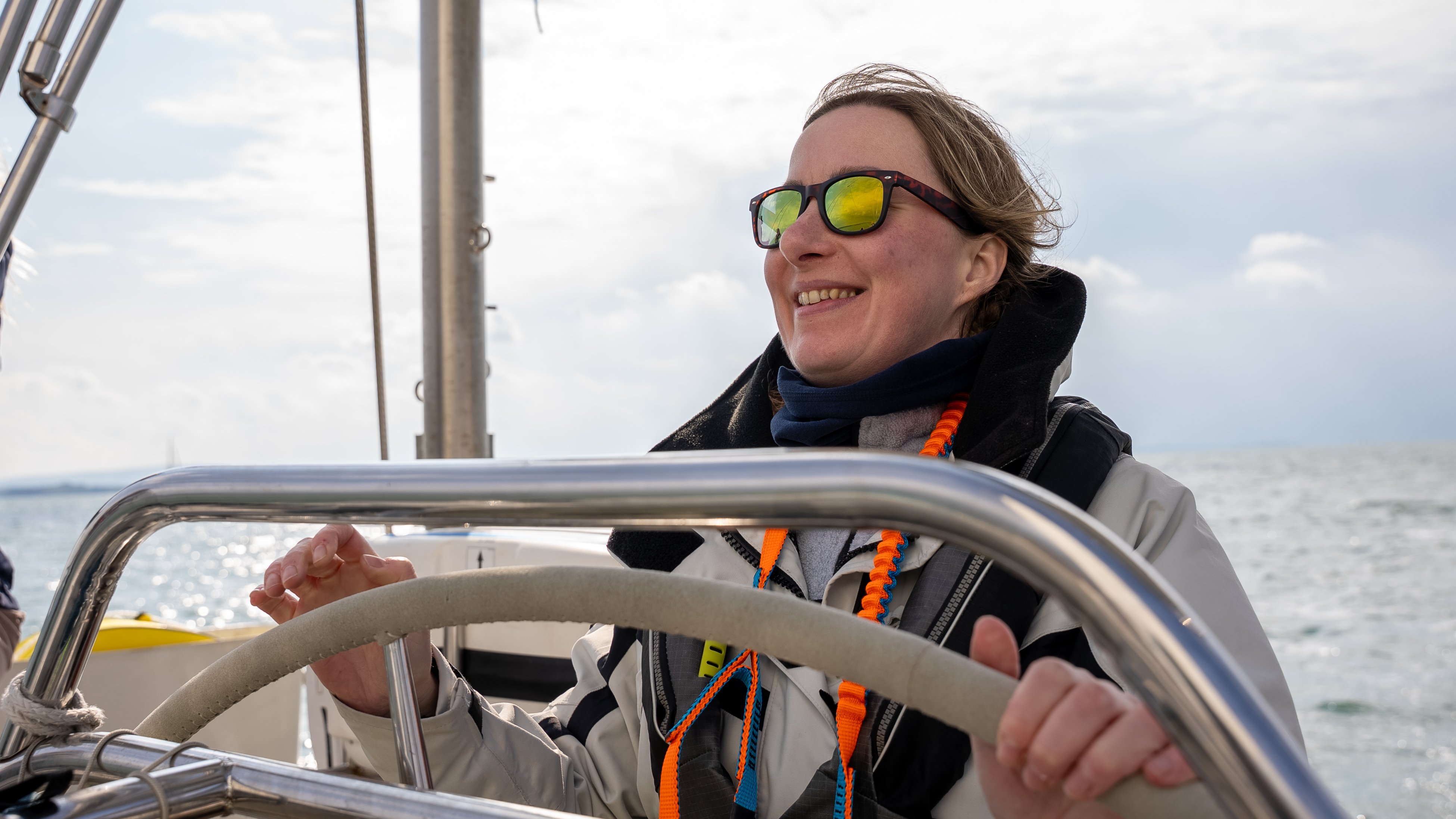
It was a powerful moment. Each of us spoke about the strengths we had shown, and we received feedback from our crewmates. For me, the highlight was being given the space to lead a watch — plotting a course, briefing the team, and coordinating sail handling. The crew told me I had a calm and collected leadership style, one that made people feel respected and guided rather than commanded.
That affirmation meant a lot. I’ve never been the loudest person in a room, and I sometimes questioned whether my quieter style could be effective. Hearing that it was not only effective but also appreciated was incredibly empowering. It reminded me that leadership doesn’t require changing who you are — it requires leaning into your strengths and being authentic.
We motor-sailed the final stretch into Portsmouth Harbour, passing familiar landmarks, before berthing once more at Gunwharf Quays at 1300. The rain was still falling, but it didn’t matter. We’d completed a safe and successful passage, covering 62 NM across three days, and had grown both as sailors and as leaders.
Reflections
The Command & Communicate retreat was more than a sailing trip. It was a space to test myself, to learn, and to connect with others on the same journey of growth.
I left with a renewed faith in my own leadership style. I no longer feel lacking because I’m not the commanding voice; instead, I’ve learned to celebrate my calm, guiding approach. Authentic leadership wins hearts and minds — and that’s something I’ll carry into my professional life as much as my sailing.
If there’s one takeaway I’d share with anyone reading this, it’s this:
Be yourself. Hone in on your skills. There’s no one perfect leadership or communication style. The most effective leaders are authentic.
Credit to Dani Devine for the photos throughout this post.
Share Your Thoughts
Your comments and reflections mean a lot — feel free to share them below. 👇